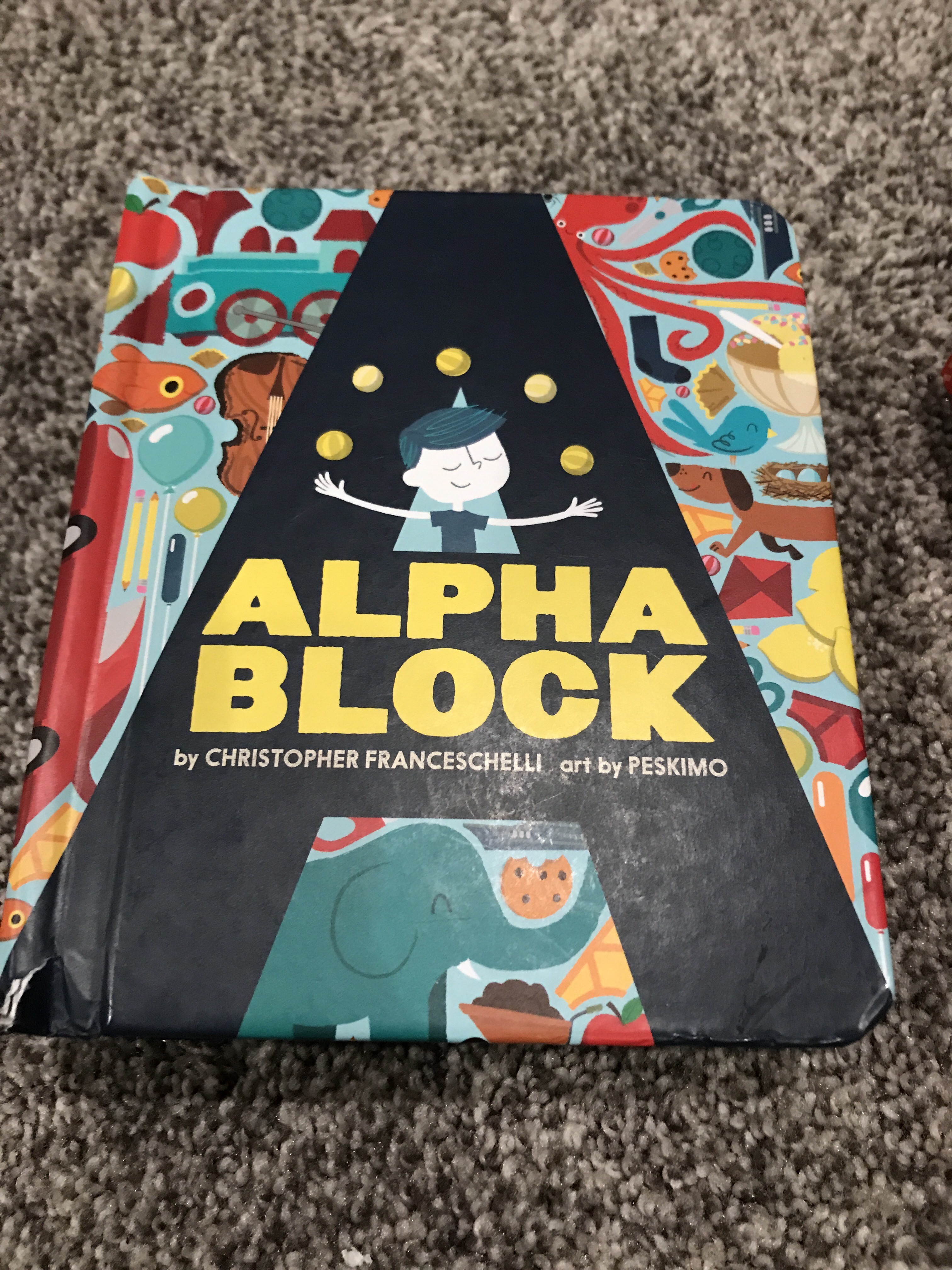
The No. 1 Ladies’ Detective Agency series
- By : Cynthia
- Category : Reviews
- Tags: Book, Book Review
Book 18: The House of Unexpected Sisters
Book 17: Precious and Grace
Book 16: The Woman Who Walked in Sunshine
Book 15: The Handsome Man’s De Luxe Cafe

Book 14: The Minor Adjustment Beauty Salon
Book 13: The Limpopo Academy of Private Detection

Book 12: The Saturday Big Tent Wedding Party

This was probably my least favorite book in this series. There didn’t seem to be as much food for thought in this book. There were a few lines which jumped out at me though. There is some reflection on various unsolved situations which Mma Ramotswe is working on when she ponders that “time will tell” in each of these cases, but then there is the question of “What if time tells us what we don’t want to hear?” Interesting.
In one dealing with Charlie, the mostly irresponsible apprentice in the mechanic shop, Mma. Ramotswe finds a reason to remind him that “we like you the way you are, Charlie” in regard to a good thing she was able to point out about him. She summarizes that “It was a gesture, she thought, of unequivocal pleasure – pleasure at hearing what all of us wanted to hear at least occasionally: that there was somebody who liked us, whatever our faults, and like us sufficiently to say so.” A good reminder to be on the lookout for opportunity to express something positive about people whose paths have crossed ours.
Toward the end of the book, Mma Ramotswe reflects on the old Botswana ways when people weren’t rushing here and there all the time. And, she wants to be more like the old Botswana and vows to “always take the time to drink tea, to look at the sky, and to talk.” Because… what did rushing around or money bring? “Did money bring any greater happiness that furnished by a well-made cup of red bush tea and a moment or two with a good friend.” She thinks not and I agree. As I rush around finishing up all that has to be done before I depart for Africa in just under 3 weeks, this is a good and timely reminder.
Book 11: The Double Comfort Safari Club
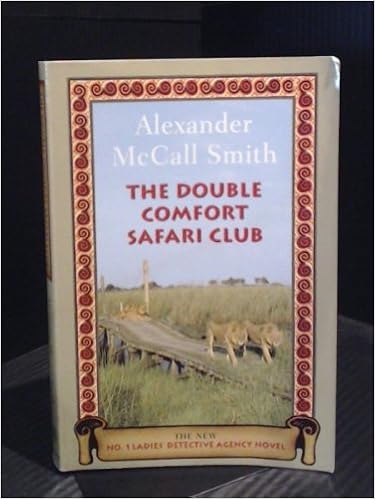
Another charming book! There are lots of little tidbits for life starting right in the very first chapter with a little comparison of people to cars. The author summarizes people of the world in this way. “It was composed of a few almost perfect people (ourselves); then there were a good many people who generally did their best but were not all that perfect (our friends and colleagues); and finally, there were a few rather nasty ones (our enemies and opponents).” That seems fairly accurate even if you haven’t read the paragraphs leading up to this particular statement.
This book also continues to discuss the themes of the “Old Botswana” which could really be likened to any elders in any country, I suppose. This particular sentence stood out to me. “The realisation of our mortality came slowly, in dribs and drabs, until we bleakly acknowledged that everything was on loan to us for a short time – the world, our possessions, the people we knew and loved. But we could not spend our time dwelling on our mortality; we still had to behave as if the worst would not happen, for otherwise we would not do very much, we would be defeated and give up.” Isn’t that the truth!
This book gives plenty of opportunity to further consider the statement in the first paragraph regarding the generally “nasty” people we encounter in our lives. Midway through the book, Mma Ramotswe ponders what an odd thing it is that people generally take pleasure in hearing bad news of those whose behaviors or personalities and such we disapprove. She goes on to say that while such news should make us sad for them, it usually has the opposite effect because “it confirmed the view we had of such people, and laid to rest doubts about our judgement.” I’m sure we’ve all encountered this attitude. This was in regard to people we know generally, but the chapter also discusses “wickedness” in broad scale terms (governments or militant groups). “There were times when wickedness seemed to be so firmly entrenched that any attempt to disloge it, any rebellion against it, appeared futile.” The author goes on to point out that many people live their whole lives under such wickedness – oppression, injustices, tyranny, etc. “And yet people often managed to overcome the things that held them down because they refused to believe that they could not do anything about it, and acted as if they could do something.” This seems to contradict something I read in another book which states that those who survive horrors (prison camp situation) are usually the ones who had given up hope because those who hoped couldn’t continue day after day when nothing changed… Those who had given up hope became more adaptable to their situation. It’s interesting to ponder these two different viewpoints.
Early in the book, Mma Makutsi has a discussion with her shoes about generosity. She recalls how far she’s come from her childhood days and declares that when she is a little better off financially (when she marries her fiance who owns a furniture store) that THEN she will become generous, but right now she doesn’t have anything to give anyone. That all changes when she gets caught in a rain storm. An impending rain storm must smell the same worldwide as Mma Makutsi remarks, “the smell of rain, that half dusty smell that was like no other, overpowering in the intensity of associations for anyone raised in a dry country. It was synonymous with joy, with renewal, with life itself.” She likes it to “pula” (Money) which also stands for so much – joy, money, rain. You’ll have to read the book to see how the rain storm causes Mma Makutsi to decide that NOW is the time to be generous even if she has little to give.
Finally, the name of the book comes into play when the two detectives go on safari to locate someone they’ve been asked to find. This excursion lends itself to a very nice discussion about hospitality. It’s interesting how a friend of a cousin’s relative or neighbor or some such distant connection would be considered “sufficiently close to allow for a request for hospitality” in the form of several nights lodging, many meals, whatever was needed. It was the “old Botwsana morality in action; you helped people who had helped you, or who knew people whom you had helped.”
At the end of the book, similar to many of the other ones, there was a discussion of life over tea with a friend. There they discussed Mma Ramotswe’s late father, Obed, and the “old Botswana” way which was “having the right approach to life was a great gift in this life.” The last remaining chapter contained short one sentence reminders about several attributes which would lead to having the right approach to life.
This was probably one of my favorite books in the series so far!
Book 10: Tea Time for the Traditionally Built

The fate of Mma Ramotswe’s little white van which has been unfolding over the last few books has finally come about and the discussion of how “we” as in individuals as well as countries have become lazy is expounded upon resulting in Mma Ramotswe deciding to take up walking instead of driving her van, but it’s not to last very long. There is also the discussion of how everyone is a brother and sister no matter where they have come from and how Botswana has been a peaceful country with no particular enemies to speak of. There is also the wondering of why it’s necessary to kill and maim other people when everyone everywhere really just want, “to live with their families and go to work in the morning and have enough to eat at the end of the day.” There is the wondering about how young girls can be protected in the absence of a father and mother. Yet, “Somehow humanity got by; somehow children grew up in the most unpromising of surroundings.” There are actually quite a lot of things contemplated in this particular book much of which is discussed over “tea time” as the name suggests. A few of the books have ended with Mma Ramotswe visiting her friend Mma Potokwane at the orphanage discussing the latest events and thinking about cows and this book ends in the same manner.
My main take away from this book is that no matter whether you have little or plenty people enjoy meaningful conversation with a good friend over their favorite beverage. And, it’s good to take time occasionally for such things.
Book 9: The Miracle at Speedy Motors
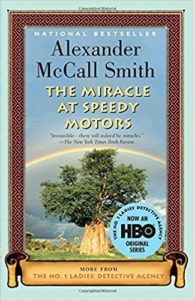
This was a fun book to read over Christmas break. The main story which runs throughout this book is one of finding a miracle cue for the orphaned daughter whom Mma Ramotswe and Mr. J.L.B. Matekoni have taken into their home along with the girl’s brother. She has a debilitating disease which leaves her in a wheelchair.
Some favorites parts of this book include the continuation of Mma Makutis’s shoes talking to her. In particular, one dialog where she’s pondering, “what it would be like to have buying power – not having to worry about what one had to pay, but deciding whether or not to buy something purely on the basis of whether one wanted to buy it. And would that apply, she asked herself, to shoes?” Here in the western world it’s hard to comprehend such poverty as there is in Africa. Even among those who are better off than the poorest of the poor in developing countries, I’m certain they don’t have the luxury of making purchases on a whim such as we don’t even give a second thought to here in the States.
Then, there are also all of the one liners found in each book which carry such truth in a short statement such as this – “A tidy office is an efficient office.” Boy, is that ever true here in our home office! I’m looking forward to January when I usually have a little more time to clean up piles of papers which have accumulated throughout the year.
Throughout all of the books in this series there is an undertone, in my opinion, of taking digs here and there at the western world. I found this one funny rather than offensive. While having tea there is a discussion which takes place indicating there is nothing worse than being served tea in an untimely manner so that it’s not hot when served. That discussion is followed by this comment from Mma Ramotswe, “I have heard that in America they even drink it with ice.” More dialog about how they couldn’t believe that would be true, but someone who had been there confirmed it and that it is a “very serious thing.” Ice is definitely a luxury in Africa so this is understandable.
In the end, the miracle they are hoping for doesn’t work out, but there are plenty of other everyday miracles which are reflected upon at the end of the book. This is what made it a fitting read right during the Christmas season. It’s another fun, easy-reading book and I already have the next one in the series sitting by my chair ready to begin.
Book 8: The Good Husband of Zebra Drive

This might be my favorite book so far in this series as it explores more thoroughly the larger matters of life. One paragraph in particular sticks out to me and it is this:
“Great feuds often need very few words to resolve them. Disputes, even between nations, between peoples, can be set to rest with simple acts of contrition and corresponding forgiveness, can so often be shown to be based on nothing much other than pride and misunderstanding, and the forgetting of the humanity of the other – and land, of course.”
One line that struck me is that “age replaces youthful optimism and courage with caution and fear.” I hope to come back to this again and pray that in my advancing age, I will move forward with optimism and courage to embrace new seasons rather than treading cautiously or fearfully into the unknown years ahead.
I really enjoyed how this book summarized many of life’s situations which were explored in this book – mistakes, youthful optimism, youthful inexperience, taking things for granted – or not, etc. It was particularly enjoyable to read this book in the series during Thanksgiving week. Toward the end of the book, the author brings home the point that “daily life in , with all of its responsibilities and problems” is always there, but there are all of the larger and smaller things of life to tend to as well… “acts of helping others, small ways of making ones own life better” which the author lists among the possibilities such things as acts of love, acts of tea, and acts of laughter….” A good note to end Thanksgiving Day on…
Book 7: Blue Shoes and Happiness
As with all of the other books, each time a character from a previous book is introduced in the current book there is a brief recap of the key point(s) of that character’s past which makes this book one that can be read as a stand alone book. However, I highly recommend reading them in order if you can as each story/point is fully explored in previous books. The key point of this book is Mma Ramotswe’s “traditional figure” which is overweight enough that three different people mention it to her in this book whereas in previous books her weight is only referenced occasionally as being “traditionally built.” I have enjoyed the humorous conversations which Mma Makutsi has with her shoes in previous books and those continue on in this book as well including conversations with a new pair of blue shoes. If you take time to read this book, you’ll understand the title and what blue shoes have to do with happiness or the lack thereof. The book ends with a dialog with two women encouraging one another to there should be time for work AND play; and time for sitting to watch the sun both set and rise; and for listening/watching cattle. This was another enjoyable, quick reading book with good advice for life whether you’re in the west or in Africa.
The Kalahari Typing School for Men (book 4)
Favorite quote which is found at the end of the first chapter. “…it is possible to change the world, if one is determined enough, and if one sees with sufficient clarity just what it is that has to be changed.”
Book 6: In the Company of Cheerful Ladies
Book 5: The Full Cupboard of Life
Book 4: The Kalahari Typing School For Men
Book 3: Morality for Beautiful Girls
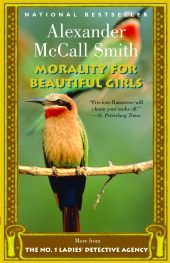
Book 2: Tears of the Giraffe

Book 1: The No. 1 Ladies’ Detective Agency

When I’m traveling somewhere for vacation, mission work, business, etc., I like to choose a book to read about the places where I’m going or where I’ve been. I was so excited when my mother-in-law introduced me to this series shortly after my return from the first trip to Tanzania. I found the undertone of this first book to be a little anti western world, but I still thoroughly enjoyed it and plan to read the rest of the series. Here is one quote from the book: “That is the problem with governments these days. They want to do things all the time; they are always very busy thinking of what things they can do next. That is not what people want. People want to be left alone to look after their cattle.” It is TRUE anywhere you go, people want less intrusion from their government.
For a complete listing of all of Alexander McCall Smith’s books click the link.