Looks like a great book. I will put that on my to read list.
Reviews
6
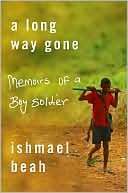
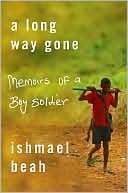
I’m not sure why I was drawn to this book one day when I was browsing the shelves at Borders unless it was because I subconsciously recognized it from the review on Kristine’s blog. although I didn’t remember reading her review until she reminded me that she had already read the book. I almost bought it that day until I remembered my filled-to the-edges bookcases. I decided to see if the library carried it, instead. I was pleasantly surprised to see they did AND they also had the audio version! I decided to give the audio version a try and I’m SO GLAD I did! It provided 8.5 hours of quality multitasking while I was painting the dining room, fixing some muffins, bread, peppers, and other things for the freezer, driving to/from town for parts and such while we were working on the dining room and bathroom and whenever I could find a few minutes to listen without kiddos around. I would NOT recommend listening to this with the kids in earshot because of the vivid descriptions of violence.I think the reason I REALLY enjoyed the audio version is because it was read by the author! He read like he was telling the story for the first time instead of reading from a book. You could really feel the emotion in his voice while he was reading various parts. Half way through the book I found I had had enough of the detailed descriptions of him running from the war and then recounting his days of fighting in the war to the point that I just wanted to get to the part where he gets out. It’s unbelievable how UNICEF was able to rehabilitate these boys. I found it amazing that Ishmael was able to find a living relative. I didn’t like having to hear all of the war stories told again as he retold them during his therapy sessions, but that’s just me. I had had enough of the war parts and wanted more information on the rehabilitation process. I enjoyed the parts where he shared how he was chosen to travel to NYC to tell his story. I’m hoping there will be a sequel because I felt like I was left hanging. I know he eventually makes it to NYC and now resides there because of the author information listed on the dust cover, but I want to know how he got there. The story leaves off after he’s made it out of Sierra Leone, but doesn’t tell how he actually gets to NYC nor what he does after he gets there. I was surprised that this book came out so recently.. just this past March. And, I was surprised how recently the war in Sierra Leone took place. Again, I was left wanting more information so I’ve checked out a HUGE book titled the Fate of Africa and I’ll post a review of it after I’ve waded through it… it’ll be awhile (LOL). Oh.. and I thought the title of this book was interesting and was glad that I caught the line in the story. Then I understood the title.Here is a synposis of A Long Way Gone from the Barnes & Noble website:
My new friends have begun to suspect I haven’t told them the full story of my life.
“Why did you leave Sierra Leone?â€
“Because there is a war.â€
“You mean, you saw people running around with guns and shooting each other?â€
“Yes, all the time.â€
“Cool.â€
I smile a little.
“You should tell us about it sometime.â€
“Yes, sometime.â€
This is how wars are fought now: by children, hopped-up on drugs and wielding AK-47s. Children have become soldiers of choice. In the more than fifty conflicts going on worldwide, it is estimated that there are some 300,000 child soldiers. Ishmael Beah used to be one of them.
What is war like through the eyes of a child soldier? How does one become a killer? How does one stop? Child soldiers have been profiled by journalists, and novelists have struggled to imagine their lives. But until now, there has not been a first-person account from someone who came through this hell and survived.
In A Long Way Gone, Beah, now twenty-five years old, tells a riveting story: how at the age of twelve, he fled attacking rebels and wandered a land rendered unrecognizable by violence. By thirteen, he’d been picked up by the government army, and Beah, at heart a gentle boy, found that he was capable of truly terrible acts. This is a rare and mesmerizing account, told with real literary force and heartbreaking honesty.
Biography
Ishmael Beah came to the United States when he was seventeen and graduated from Oberlin College in 2004. He is a member of Human Rights Watch Children’s Division Advisory Committee and has spoken before the United Nations on several occasions. He lives in New York City.